Authority and Power: God's Rebuke
- Raymond Melendez

- 5 hours ago
- 7 min read
At TheGoodNewsCast.com, we believe that all heads, whether political or national, eventually fall under Christ, with God remaining sovereign over all.
Throughout Scripture, a recurring theme is evident: God holds sovereignty over nations, leaders, and the powers that shape the trajectory of history. The seven deadly sins—pride, greed, lust, envy, gluttony, wrath, and sloth—are catalysts for societal ruin (cf. Galatians 5:19–21). In the Old Testament, God frequently employed mighty nations to bring judgment against corruption. Assyria and Babylon became “rods” of God’s anger, raised to discipline Israel and Judah when they strayed (Isaiah 10:5–6). Yet even these mighty nations were not immune to spiritual judgment. Their arrogance, cruelty, and overreach drew God’s rebuke, as seen in Jeremiah’s condemnation of Babylon (Jeremiah 50–51) and Zechariah’s warning against nations that acted with malicious intent (Zechariah 1:15). The message is unmistakable: no nation, however strong, stands above God (Psalm 33:10–12).

This trend persists in the contemporary world, where authority, justice, and national power are still hotly debated. In the United States, discussions over federal authority have intensified, especially regarding the use of federal law enforcement in immigration and domestic security. Critics argue that recent actions reflect overreach—marked by force, cruelty, and a disregard for human life (Chishti and Bush-Joseph). Supporters insist these measures are necessary responses to complex challenges. The tension between these perspectives has become a defining feature of the current political landscape, revealing deep anxieties about the balance between security, liberty, and human dignity.
When considered collectively, the biblical record and modern discussions serve as a powerful reminder: ultimate authority rests with Christ. Nations ascend and decline, policies evolve, and leaders change, yet the pursuit of justice grounded in God's righteousness remains unwavering (Micah 6:8).
Christ's Authority: Deliverance from Evil
The New Testament unveils a dramatic shift in how God addresses sin and wrath. No longer does a nation administer God's punishment; instead, Jesus takes on the suffering of humanity's sins, fulfilling the punishment it rightly deserves. Paul declared, “For the wages of sin is death, but the gift of God is eternal life in Christ Jesus our Lord” (Romans 6:23). Christ endured the suffering that emerges when nations and rulers rise to judge, only to later fall under the weight of their own judgments. The Book of Mormon affirms his mission:
"Christ shall go forth, suffering pains and afflictions and temptations of every kind…that he may know according to the flesh how to succor his people.” Alma 7
His suffering is deeply empathetic, strengthening those who endure such hardship, while encouraging them to rise above the fall.
In the United States, the presence of federal agents in cities far from the southern border has ignited intense debate. Large-scale raids, targeted arrests, and crowd-control operations have raised questions about the boundaries of federal power. Local leaders contend that such actions undermine public trust and uproot the foundations of self governance.

For critics, the issue reaches beyond legal jurisdiction. The presence of heavily armed federal agents in residential areas has been characterized as a demonstration of military control and overreach. Lawsuits contend that some operations pushed constitutional limits, while others—though technically lawful—were carried out with brutal force and a posture that appeared to disregard the communities affected ("MN Attorney General"). Supporters view these actions as necessary responses to complex challenges, but opponents see them as evidence of a federal power too quick to assert itself and too slow to consider the cost.
In comparison, Christ’s mission and today's conflicts over the use of authority reveal a powerful contrast. Christ exerts his authority to heal the world's suffering, while the deployment of federal agents is often perceived as deepening the very injustice it seeks to address. This contrast urges us to consider how authority is exercised and how, as a nation, we can rise above the unrest that has defined the course of history.
Christ: Ruler of the Earth
The life and teachings of Christ reveal the limitations of all existing and future authorities. Standing before Pilate, Jesus declared, “You would have no power over me if it were not given to you from above” (John 19:11). With that single statement, he revealed that all authority is delegated and ultimately answers to God. Even at the time of his arrest, Jesus reminded his disciples that he held authority greater than any other.
“Do you think I cannot call on my Heavenly Father and put at my disposal more than twelve legions of angels?” Matthew 26
Yet he exercised restraint, as his mission was not to judge the world but to empathize with it and save it from its own judgments. Revelation affirms his unmatched authority, proclaiming Jesus as “the faithful witness…the ruler of the earth…[who] has freed us from our sins by his blood” (Revelation 1:5). No nation, dictator, or oppressive system can surpass his authority.

Christ's model of authority stands in stark contrast to the struggles unfolding in our country. Allegations of excessive force by federal agents have stirred deep concern across the nation. Reports from human rights groups, legal advocates, and journalists describe the use of chemical agents, physical force, and aggressive crowd control tactics during protests and enforcement operations (Amnesty International). In several widely publicized incidents, civilians were seriously injured or killed, intensifying claims that force was used disproportionately or without adequate restraint.
Critics argue that these events reveal a troubling pattern—not always rooted in malice, but in a system where militarized tactics and unpredictable behavior can place ordinary people, including peaceful protesters and bystanders, at risk. The lack of body-worn cameras and thorough reviews has intensified public concerns regarding the authorities' use of power.
In this light, Christ’s authority calls all powers to account. When systems are tempted to equate authority with force, Christ exercises restraint exposing how dangerous they become when severed from a justice rooted in God's righteousness. For societies wrestling with fear, unrest, and the misuse of authority, the question is not merely who truly holds power, but how it is exercised and by what measure. When compared to the ruler of the earth, every authority stands judged—yet invited to submit to his authority as he empathizes with them without condeming them.
Saved from the Curse: The Rise and Fall
History is filled with the rise and collapse of empires—Assyria, Babylon, Rome, and many others. Each ascended to dominate, often through oppression, and each eventually fell. Scripture reveals a clear pattern: when nations exalt themselves to God-like status, they are inevitably humbled. Yet Christ saves us from this curse. Rather than rising with judgment at hand, he empathizes with the world and offers God's salvation under his authority. Moses captured this hope and proclaimed, “God is my strength, my defense, and my salvation” (Exodus 15:2). God's salvation is available to all including powers that submit to Jesus' authority. Under his authority, we are declared a people belonging to God and no longer under judgment.
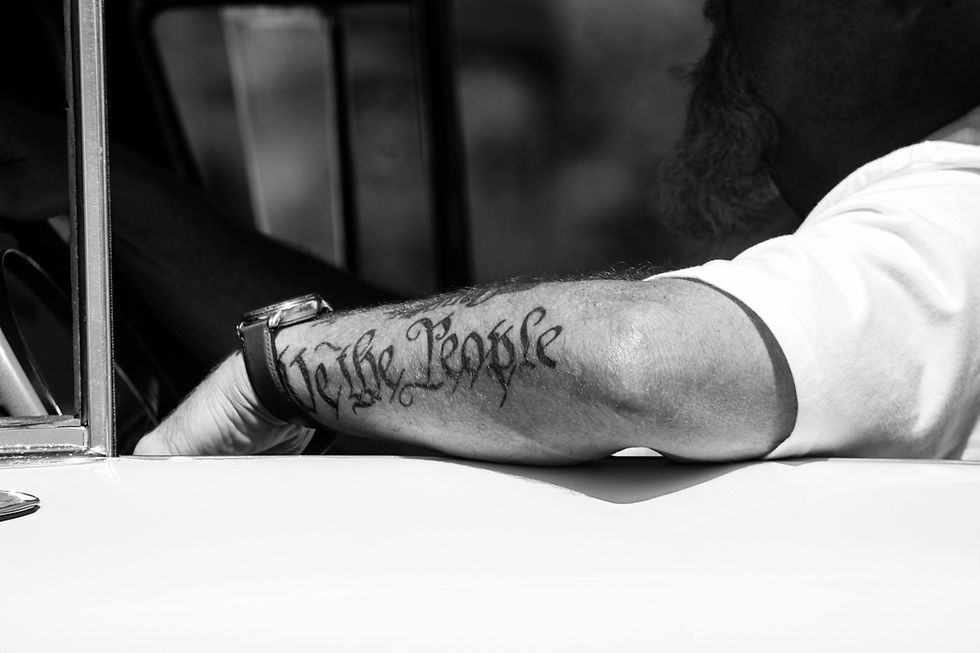
This biblical truth stands alongside a very different kind of debate unfolding in the United States. Supporters of the current administration reject claims of federal overreach, insisting that immigration enforcement and border control fall squarely within federal responsibility as defined by Congress. From their perspective, deploying federal agents across the country is not an abuse of power but a lawful execution of duty. They argue that agents follow established rules of engagement and use force only when necessary to protect officers or prevent interference with legitimate operations.
Administration officials also highlight the unpredictable and sometimes chaotic environments in which federal personnel operate. Confrontations with hostile crowds or organized attempts to obstruct arrests, they say, require robust tactics as practical responses to real threats. They further point out that the Department of Justice and the federal courts investigate any alleged civil rights violations (U.S. Department of Justice).
Collectively, these reports highlight a significant tension between Christ's authority and that of others. Christ empathizes and saves the world when it is judged, especially in moments when governments and communities struggle to discern how authority should be used amid complex and contentious situations.
Christ: King of Kings and Lord of Lords
Scripture teaches that every ruler, system, and society ultimately falls under Christ. He alone is King of Kings and Lord of Lords, calling nations to trust in God’s sovereignty even in seasons of political upheaval or cultural decline. Paul affirms this unshakable truth in Philippians 2:10–11, declaring that every knee will bow and every tongue will confess Jesus as Lord. Therefore, be confident that no leader, no force, and no form of oppression can succeed against those who submit to Christ's authority and do the will of the Heavenly Father.
This biblical truth stands alongside a pressing national debate about how authority is exercised within American democracy. The concern over federal enforcement has become a test of governance itself. Critics warn that normalizing aggressive federal action risks weakening constitutional norms and eroding public trust, particularly among vulnerable communities. Supporters counter that limiting federal authority too sharply could hinder the government’s ability to uphold the rule of law and carry out policies enacted through democratic processes.
History shows that the United States often extends its reach during moments of fear or crisis, only to reevaluate those decisions later. Whether today’s actions will be remembered as necessary measures or as examples of overreach remains uncertain, but what is clear is that the very act of questioning its reach reflects a healthy democratic impulse—a continuing effort to define the limits of federal authority and ensure accountability that weighs the costs a nation is willing to bear for its security.
These reflections remind us that while governments and its citizens struggle with the boundaries of authority, Christ's authority prevails, urging all nations and powers to pursue justice rooted in God's righteousness. God remains sovereign over all, and those who submit to Christ are never abandoned to the shifting tides of human authority.
Works Cited
Amnesty International. The High Cost of Federal Policing: Human Rights Violations in Domestic Operations. Amnesty International USA, 2024, www.amnestyusa.org/.
Chishti, Muzaffar, and Kathleen Bush-Joseph. The Evolution of Federal Immigration Enforcement and the Limits of State Power. Migration Policy Institute, 2023, www.migrationpolicy.org.
"MN Attorney General, Minneapolis and Saint Paul Sue to Halt ICE Surge into Minnesota." City of Minneapolis News, 12 Jan. 2026, www.minneapolismn.gov/news/2026/january/ag-lawsuit/.
U.S. Department of Justice. "1-16.000 - Department of Justice Policy On Use Of Force." Justice Manual, updated Jan. 2025, www.justice.gov/jm/1-16000-department-justice-policy-use-force.


